
Mpumi Phillips Knows What Happens After a Good Song
Before leading distribution at The Orchard, Mpumi Phillips worked where songs met television, publishers and the people deciding what audiences would hear. Her route from Ghetto Ruff and Sheer to a global distribution business is a story about hearing potential—and building somewhere for it to go.
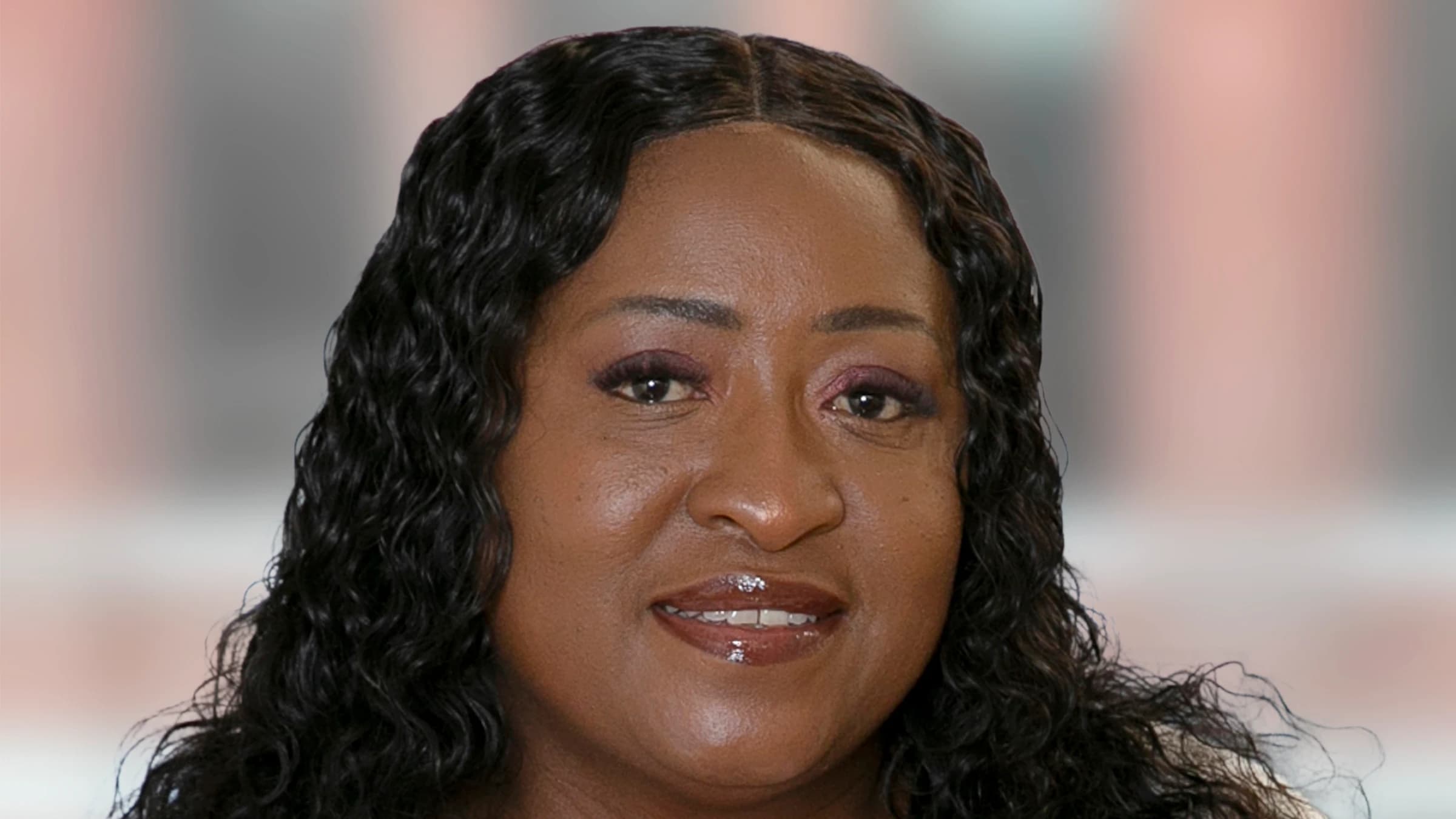
Written by
Battora × Mpumi Phillips
At a music-rights event in Johannesburg in 2018, a song could enter the room with a composer and leave with the possibility of a television placement. SynConnect, part of the DISCOP and ONGEA programme, brought publishers and composers into contact with music supervisors. Mpumi Phillips was among the people helping make the encounter happen, with Rhythm City offering an opportunity for a suitable track. [1]
Nothing about that opportunity was as simple as pressing play. The music had to meet a particular need. Somebody had to understand both the composition and the production waiting for it. There had to be a route between the person who created the work and the people able to use it. Phillips was already operating along that route, combining a publisher’s awareness of repertoire with a supervisor’s sense of what a screen production required.
It is an instructive opening to a career often described through its latest title. Phillips is Director of Distribution at The Orchard in South Africa. Her 2026 Music Business Awards Africa nominations place her in A&R and Industry Champion. The titles are different; the thread is not. Her work has repeatedly involved recognising what a piece of music might become and helping assemble the conditions around it. [2] [3] [4]
Learning the business from more than one side
By the time The Orchard announced her appointment in January 2022, Phillips had spent close to two decades in the industry. The company traced her experience through label management at Ghetto Ruff and more than ten years at Sheer Publishing. She did not arrive at distribution having worked only with delivery systems. She had spent years around the records, songs and relationships those systems were meant to serve. [2]
A label and a publisher look at music from connected but different positions. The recording has a release date, artwork and a particular performance. The song may acquire another life in a different voice or setting. Moving between those worlds brings the same creative work into view on more than one timescale: what is happening around it now, and what may continue to happen after the campaign ends.
Phillips’s screen work made that second timescale concrete. Her professional profile records a long association with Rhythm City. An artist could write something without a television scene in mind and still find that the composition belonged inside one. The supervisor’s work was partly translation: hearing the possibilities in a catalogue and recognising where a production’s needs met them. [5]
The experience also connected her to musicians whose professional stories were still being formed. In a 2021 interview with the Germiston City News, Katlehong composer Bongani “Voxyzie Bone” Dlamini identified Phillips as his A&R contact while discussing his own development and work around Sheer and Rhythm City. It is a small but useful change of perspective: the executive’s role described from the musician’s side of the relationship. [6]
That account does not need a superstar’s name to make the work matter. It points to the professional opening that can be decisive much earlier in a career—somebody who understands the music well enough to connect it to a real use, rather than offering general encouragement and leaving the next step undefined.
The song finds another setting
Phillips’s contribution to screen music has extended beyond one programme. Music Exchange’s 2026 professional biography names productions including Blood & Water, Beyond the River, iNumber Number and Nothing for Mahala among her music-supervision associations. The range places her work across episodic television and film, where a song enters a story already being told through other creative disciplines. [7]
That is not simply exposure with a screen attached. The music has to live beside dialogue, images and dramatic pacing. A placement can be memorable because it makes sense at that exact point in the production, not because the audience has been asked to pause the story and admire a recording.
The 2018 SynConnect session is revealing in that light. It turned an often opaque part of the business into an encounter between people who could actually work together. Rather than telling composers that television was an opportunity somewhere in the distance, the event put repertoire, decision-makers and a specific production need into the same process. [1]
Phillips’s later appearances in professional programmes have continued that educational strand. Music In Africa included her in its 2023 ACCES programme, drawing on her publishing and supervision experience as part of a wider exchange among African music professionals. The knowledge did not remain confined to a single company’s release calendar. [8]
There is a useful symmetry here. A supervisor makes the people outside a recording hear what it can do. An educator makes the people inside the business understand how the opportunity works. Both require explaining the connection without pretending that the result happens automatically.
Bringing that history into distribution
The Orchard’s January 2022 announcement placed Phillips in charge of its Johannesburg office as Director of Distribution, alongside new appointments in Nigeria and Kenya. The company described a local role connected to its wider international operation: developing relationships with artists and labels, shaping release strategies and bringing regional knowledge into a global distribution business. [2]
For Phillips, that was not a departure from creative work so much as a different place to intervene. By the time a release arrives at a distributor, choices about repertoire, timing, collaborators and positioning have already begun to shape its prospects. The work is not rescued from those choices merely because it becomes technically available.
Her earlier experience provides a particular perspective on that stage. Someone who has worked with publishing catalogues and screen briefs knows that a song’s value need not be exhausted by the first release. Someone who has worked inside a label knows that delivery is one action in a much longer sequence of commitments. Bringing those perspectives together makes distribution more than a final handover.
Phillips’s professional story also belongs to the wider effort to make music-industry knowledge more accessible. Music Exchange identifies her as a founding member of Women in Music South Africa. That work places the development of people alongside the development of repertoire: an industry needs practitioners who can enter its decision-making spaces, not only artists hoping to reach them. [7]
The two MBAA nominations recognise that combination from different angles. A&R points towards creative judgment and development. Industry Champion points towards a contribution extending beyond a single release. Together they recognise the creative and professional development that has accompanied her move into distribution. [3] [4]
Return to Johannesburg in 2018, and the same connecting work is already there. A composer has a song. A production has a need. Between them is not an abstract promise of opportunity, but a professional who understands enough of both worlds to help them meet.
Years later, Phillips works on a larger distribution stage. The essential task remains recognisable: hear what the music can do, then make the next step possible.
Related stories

Read next
The Business Lessons Behind the Sound: Nick Matzukis’ Work in Music Education
An Industry Champion nomination recognises an educator whose career connects sound training, music law and the practical business of a creative profession.
Continue reading