
I didn’t move to Canada to become less Congolese. I moved to expand my perspective.
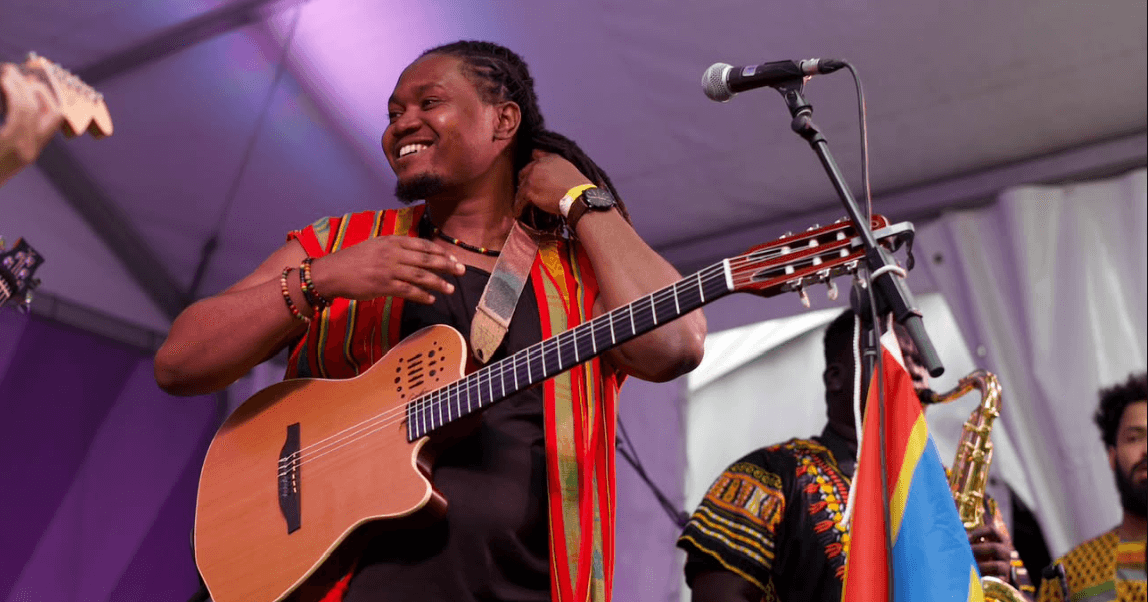
Congolese artist Jonathan Nvita navigates cultural intersections through his album Mosisa, proving that identity can travel without erasure.
Written by
Battora × Jonathan Nvita
“I Didn’t Move to Canada to Become Less Congolese”: Jonathan Nvita on Taking His Roots to the World
How much of yourself are you expected to change before the world accepts you? For Jonathan Nvita, leaving Kinshasa for Toronto made one thing clear: growth does not have to mean erasure. Through his music and his album Mosisa, the Congolese artist is proving that identity can travel.
Artists crossing borders often hear the same advice: make the music more familiar, easier to categorise, easier to sell. Nvita has had to confront that pressure.
Growing up in Kinshasa, music was part of everyday life — at home, in church, in the streets and at celebrations. He grew up surrounded by traditional Congolese sounds, folk, rumba, gospel and contemporary music.
“Music was never something distant or separate from everyday life,” Nvita tells Battora.
Kinshasa taught him that music could carry more than entertainment.
“Music is spiritual,” Nvita says. “It’s connected to emotion, identity, culture and human connection. For me, it is also a direct link to the Most High, to my roots and to my ancestors.”
That belief shapes the way he approaches his work.
“I try to create music that connects people to something deeper — our stories, our roots, our struggles, our joy and our humanity.”
Leaving home without leaving yourself
Moving to Toronto exposed Nvita to a new musical environment and musicians from different backgrounds. It also made him question where his sound fitted.
“Toronto is incredibly multicultural, but the industry can still make you feel that you need to make your music more familiar or easier to categorize for certain audiences,” he says.
He could have removed some of the African elements from his music to fit more comfortably into an existing category. Instead, he realised that would take away part of what made his voice unique.
“I didn’t move to Canada to become less Congolese. I moved to expand my perspective.”
Rather than changing his identity, Nvita chose to develop his sound.
“I want the music to be accessible to people around the world, but I don’t want accessibility to mean losing authenticity.”
Mosisa: the roots
That tension between movement and belonging sits at the heart of Mosisa, meaning “the roots.”
For Nvita, roots are about more than geography.
“My roots are my language, my family, the people who raised me, the sounds I grew up hearing, the stories I carry and the values that shaped me.”
Living away from Congo made those roots clearer.
“When you are surrounded by something every day, sometimes you don’t realize how important it is. Distance gave me a different perspective.”
Mosisa became a way of exploring what happens when a person leaves home but continues carrying it.
“You can travel across the world, learn new things, and become many different versions of yourself, but your roots remain part of your foundation.”
“The goal isn’t to live in the past. It’s to take the roots with me and allow them to grow somewhere new.”
Becoming more deeply himself
Performing outside Congo changed the way Nvita saw his identity. He found that audiences were curious about the rhythms, language, stories, melodies and perspective that came from being Congolese.
“I realised that I didn’t need to compete by trying to sound like everyone else,” he says.
“I needed to become more deeply myself.”
For Nvita, being Congolese is not a limitation. “It is one of the things that gives my music a point of view.”
That lesson extends to African artists more broadly. Reaching international audiences, he says, requires more than talent.
“You also need clarity, preparation, persistence and ownership.”
Artists must understand the business, learn how international markets work, communicate their stories and present their work professionally.
But ownership matters most.
“African artists need to understand that they don’t have to wait for someone outside Africa to define the value of their music.”
His advice is direct: “Own your music. Own your story. Understand your culture. Know what you are bringing to the conversation.”
Your roots can travel
For the young artist in Kinshasa — or anywhere in Africa — dreaming of reaching the world while fearing what might be lost along the way, Nvita has a simple message:
“Don’t be afraid of where you come from.”
Study. Collaborate. Learn how the global industry works. Grow. But do not confuse growth with becoming someone else.
“You don’t have to erase your accent, your language, your culture or your story to be understood by the world.”
There will always be people who suggest changing the music, simplifying the culture or becoming more familiar. Nvita says artists should listen, but ask whether those changes are helping them grow or simply making them less of themselves.
“Your roots can travel with you.”
Nvita says his journey is still unfolding. He is still learning and still building. But Mosisa has already taught him something important:
“The farther you travel, the more important it becomes to know where you started.”
For Jonathan Nvita, going global and staying rooted are not opposing ambitions.
“Your identity is not the thing standing between you and the world. It can be the bridge that connects you to it.”
Related stories

Read next
Battora CEO Takes Centre Stage at WFP and Japan-Backed Agri-Forge with ToraLoad’s plan to transform Zimbabwe’s agricultural logistics
Tanyaradzwa Chikopera, CEO of Battora, presented ToraLoad, a logistics platform aimed at improving the movement of agricultural goods in Zimbabwe, during the Agri-Forge Innovation Challenge 2026.
Continue reading