
raykaz-argues-that-the-challenges-faced-by-african-artists-s
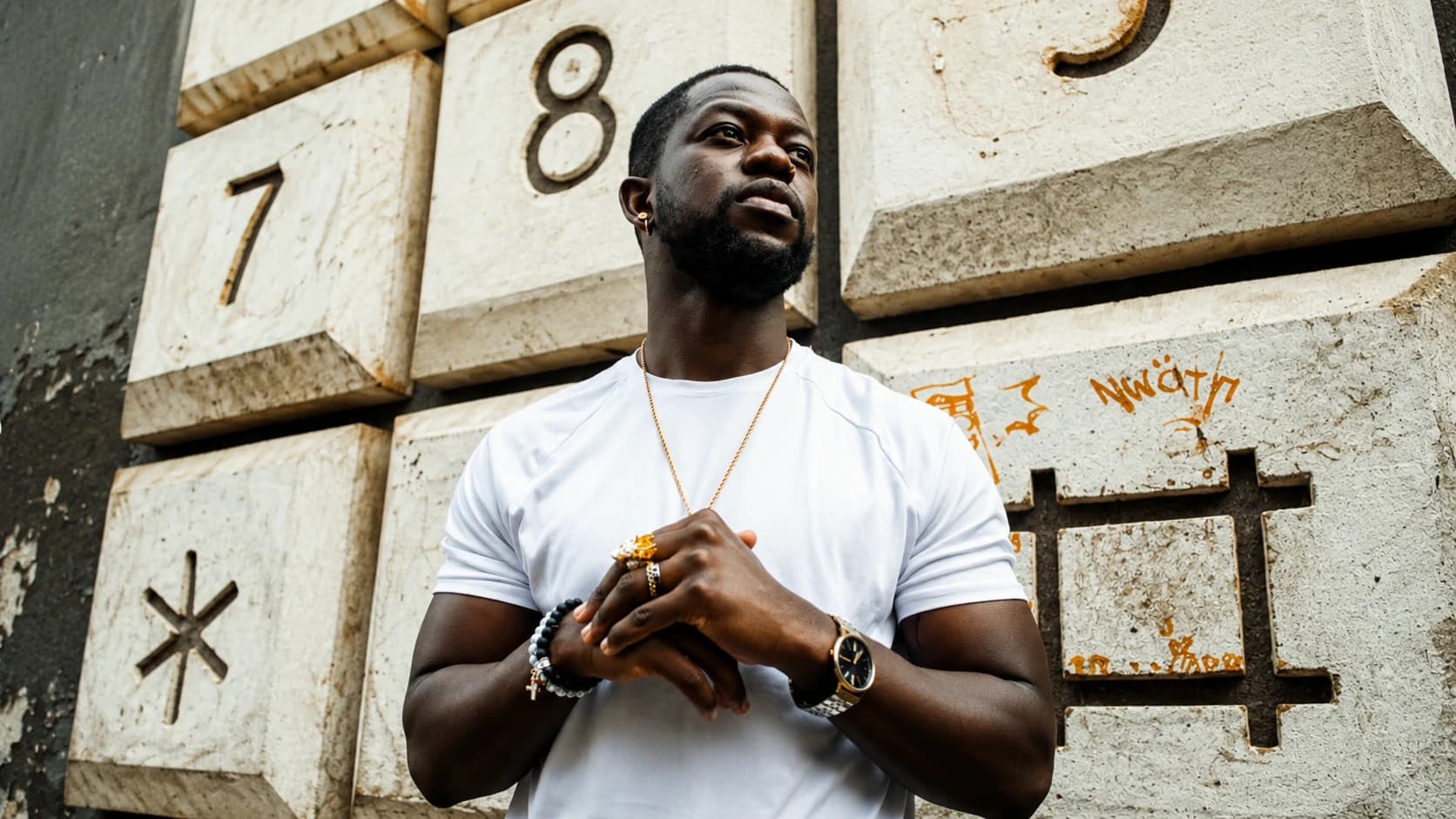
RayKaz argues that the challenges faced by African artists stem from systemic issues rather than a lack of talent or originality. He emphasizes the importance of representation and the need to dismantle the structures that limit African creativity.
Written by
Battora Editorial Team
There is a tendency whenever African creativity is discussed to ask the wrong questions.
Why don't African artists support each other?
Why aren't African creatives connected to their roots?
Why do African musicians copy the West?
Why can't African talent compete globally?
The assumption hidden beneath these questions is always the same: that the problem somehow begins with the artist.
RayKaz disagrees.
Strongly.
Throughout our conversation, he repeatedly challenged not only the answers but the questions themselves. Again and again, he returned to a central argument:
African creatives do not have a talent problem. They do not have an originality problem. They do not even have an identity problem. They have a systems problem.
For RayKaz, much of the conversation around African creativity has become a subtle form of victim blaming.
"We're asking the wrong questions," he says repeatedly.
The statement becomes the foundation of his worldview.
When asked whether Africans have been taught to see value everywhere except home, he rejects the premise. The issue, he argues, is not that artists do not value home. It is that societies often fail to value their own people until someone else does first.
He points to Zimbabwe's own social divisions and class structures. There are artists creating remarkable work, telling honest stories and pushing creative boundaries every day. Yet many remain ignored until they find validation elsewhere.
His example is simple.
Africans celebrate international stars with African roots, yet often fail to support the artists living and creating in their own countries.
The issue, then, is not a lack of belief from creatives.
It is a lack of belief from the structures around them.
This perspective extends into culture itself.
One of the most striking moments in the conversation comes when discussing whether African creatives consume too much foreign culture and too little of their own.
Again, RayKaz rejects the framing.
To him, African culture is not separate from global culture.
Hip-hop cannot be discussed without Africa.
Fashion cannot be discussed without Africa.
Athletics cannot be discussed without Africa.
Music cannot be discussed without Africa.
Much of what the world celebrates today was built upon African bodies, African creativity, African rhythm and African imagination.
The tragedy, he suggests, is that Africa often encounters its own contributions repackaged and returned through foreign lenses.
"We had the creativity. We had the dances. We had the artists. We had the athletes."
The problem is not that African culture lacks influence.
The problem is that African influence often loses ownership of itself.
This leads him to one of his strongest arguments: representation.
When discussing technology, RayKaz is less interested in platforms than in power.
Artificial intelligence systems struggle to recognize Black faces. Recommendation engines often fail to understand African contexts. Global technology is overwhelmingly shaped by people who do not share the lived experiences of the communities they serve.
His solution is remarkably straightforward.
Put African people in the rooms where decisions are being made.
Not after the technology is built.
Not as consultants.
Not as an afterthought.
At the point of creation.
"If you have people from the place you're trying to represent in the room," he argues, "many of these problems disappear before they even exist."
It is a philosophy that applies equally to music, business, politics and technology.
Representation is not symbolism.
It is infrastructure.
Perhaps the most controversial part of the conversation arrives when discussing African roots.
Many cultural commentators argue that African creatives need to reconnect with tradition. RayKaz believes even that question misses the point.
African artists do not need to return to their roots, he says.
They never left.
"You are African because you were born in Africa and raised in Africa."
Not because of your accent.
Not because of your clothes.
Not because you play traditional instruments.
Not because you speak a particular language.
Identity, in his view, is not performance.
It is lived experience.
An artist inspired by J. Cole is no less African than an artist inspired by mbira music. An artist wearing Japanese fashion is no less African than one wearing traditional attire.
What matters is authenticity.
The problem is not that Africans have lost their roots.
The problem is that they have been taught to question whether their roots are valid.
This argument becomes even sharper when he speaks about colorism and internalized colonial thinking.
He points to the way African societies continue to reward proximity to whiteness. Lighter skin is praised. Certain hair textures are described as "good hair." Wealth and success are sometimes associated with European ideals.
These are not merely cultural habits.
They are psychological systems inherited from centuries of colonial influence.
And until they are confronted, RayKaz argues, Africa will continue to act as one of its own biggest obstacles.
The conversation ultimately arrives at a profound conclusion.
African creatives are not struggling because they lack ideas.
They are not struggling because they lack originality.
They are not struggling because they have forgotten who they are.
They are struggling because systems continue to force them into categories that others do not have to navigate.
Why is Burna Boy often reduced to an "African artist" category instead of competing broadly as an artist?
Why is Tyla placed in separate boxes instead of standing alongside global pop stars?
Why is an African rapper introduced first as an African rapper rather than simply as a rapper?
These may appear to be small distinctions.
For RayKaz, they reveal something much deeper.
A world that still sees African creativity as a subset rather than a standard.
And perhaps that is the real challenge.
Not teaching African artists how to dream bigger.
But teaching the world to stop imagining them smaller.
Because if there is one message that echoes throughout this conversation, it is this:
The future of African creativity does not depend on fixing African artists.
It depends on dismantling the systems that keep trying to fix them.
Related stories
Read next
The Heartbeat of Creativity: The Genesis of Battora
Battora is more than just a platform; it embodies centuries of tradition where technology and creativity converge. As a custodian of this legacy, Tanyaradzwa Chikopera champions the uniqueness of African voices, paving the way for a future where creativity truly thrives.
Continue reading