
Caught Between Two Worlds: Ubuntu, Identity, and the African Diaspora
Molly Manyonganise's exploration of identity within the African diaspora reveals the profound tensions migrants face as they navigate the clash between Ubuntu values and Western individualism. This article delves into the emotional and cultural implications of maintaining a sense of self amidst the profound changes brought by migration.
Written by
Battora Editorial Team
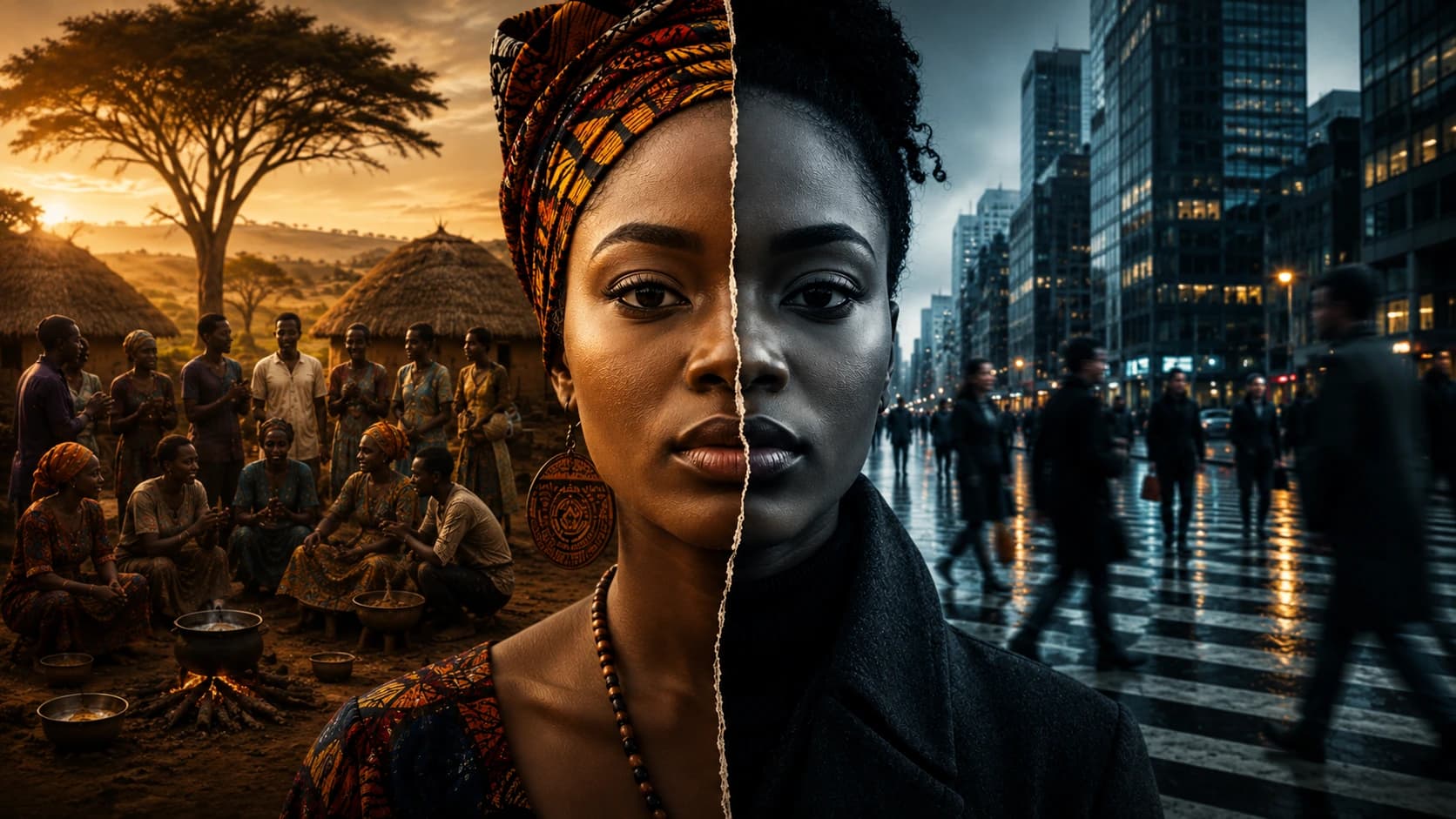
In bustling streets where the sounds of honking cars and chatter fill the air, a subtle dance unfolds beneath the surface—a dance of identity, of belonging, of the heartstrings that tie one to the land of one’s ancestors, yet stretch to accommodate a new world. For many Africans living abroad, this battle is not fought with words or laws but within the very essence of their being, where the communal spirit of Ubuntu meets the sharp edges of individualism. In her enlightening paper, Caught In-between Two Worlds: Ubuntu Identity and the African Diaspora, scholar Molly Manyonganise navigates this intricate landscape of emotional conflict, where values clash and identities are both enriched and challenged.
Ubuntu, that rich philosophy embracing the idea that “one is because we are,” is a lifeblood for countless Africans. It pulses through every gathering, every shared meal, every tender moment spent in company. This is the essence of home—the warmth of checking in on a neighbor, the unspoken obligation to uplift family, the collective responsibility that intertwines lives like threads in a colorful tapestry. Yet, step outside the borders of our continent, and suddenly these gestures, heartwarming in their familiarity, can morph into awkward encounters. Many find that asking about someone’s health, an act of genuine concern, can be perceived as intrusive in more individualistic societies. Suddenly, the very fabric of caring feels frayed, and questions about wellbeing are met with puzzled expressions rather than gratitude.
Hospitality, too, transforms in this new world. An invitation to share a meal, a gesture meant to signify warmth and support, often comes with an unspoken expectation that the guest will foot their own bill. The shock experienced by many newcomers can be immense—a reminder that values deeply embedded in their culture clash starkly with the realities outside. In these moments, the heart aches with the weight of transition, caught between wanting to share warmth and facing the cold rebuff of misunderstanding.
But it’s not just the food and greetings that reshape their identities. Migration ripples across family structures and gender roles, creating waves of liberation and struggle. For many African women, the chance to gain employment abroad offers a powerful opportunity to break free from traditional patriarchal confines. Yet, for African men, the loss of authority—the validation tied to familial roles back home—can leave them feeling adrift. This renegotiation of identity is a double-edged sword, where newfound freedoms are shadowed by a yearning for the respect and acknowledgment they once felt.
Parenting emerges as yet another battleground. The discipline enforced in many African households can lead to legal dilemmas in Western contexts, where corporal punishment is outlawed. Parents find themselves in a twist of emotions, daring to maintain vibrant customs while navigating unfamiliar systems that dictate child rights in ways foreign to them. It’s a delicate balance of love and legality, rooted in a desire to preserve home while needing to adapt to a new reality.
Despite the challenges and the difficult negotiations that migration demands, Ubuntu persists. It flourishes in daily interactions—the WhatsApp groups buzzing with family news, the gatherings celebrating weddings, the quiet recognition in a nod exchanged on foreign streets. These moments serve as reminders that the essence of Ubuntu, though challenged, is not lost. Rather, it evolves, adapting to the landscape of wherever one might find themselves.
As Manyonganise poignantly illustrates, migration is not just a physical journey; it’s a philosophical transformation. Second-generation Africans, often weaving through layers of identity, embody this evolution. They live the duality of being African at home yet British, Canadian, or German outside. Familial attempts to preserve language and traditions through cultural gatherings breathe life into the struggle, allowing Ubuntu to simmer just beneath the surface—alive, vibrant, and defiant.
Ultimately, the journey of those in the diaspora is a testament to resilience. They navigate a world where the familiar comforts of “we” exist alongside the stark independence of “me.” In this beautiful, chaotic intersection, they hold onto their identities, their heritage, and the profound truths of Ubuntu. This dance between two worlds does not diminish the essence of who they are; rather, it enriches their narrative, reminding us all that being African transcends geography—it is a heartbeat, a collective soul, resonating no matter where one may roam.
Related stories


Read next
Nkula: A Celebration of Black-Owned Wine Culture in Cape Town
Nkula is redefining the wine experience in South Africa by curating a selection of Black-owned and Black-led wine brands. This article explores how Nkula's approach fosters cultural ownership and inclusivity within the South African wine industry.
Continue reading